Accurate Prices,
No Surprises
Get verified pricing data for any property in Bengaluru











Prevent overpaying and underselling

Guided accurate auction bids

Clear, real time market pricing

Pricing without guesswork

Process to Price
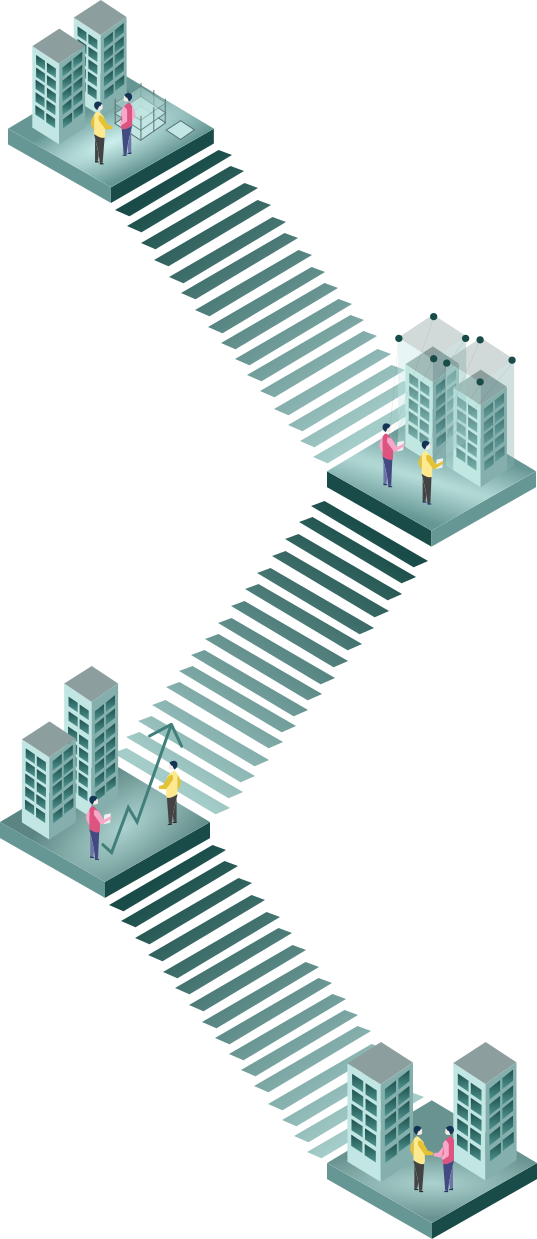
Collect & Verify
We gather all required information to understand the property completely.
Assessment
We assess the property and evaluate it across 80+ critical factors.
Benchmarking
We compare it with similar properties, nearby transactions, and current area price trends.
Fair Price Output
We deliver a clear, data-backed fair price you can trust.
4,500+
Auction Properties Analysed
10,000+
RE Projects Database
1,500+
RE Valuations Advised

4,500+
Auction Properties Analysed
10,000+
RE Projects Database
1,500+
RE Valuations Advised
15+
Years of Real Estate Experience
Why Knowing the Fair Price Matters?
PEACH vs LEMON
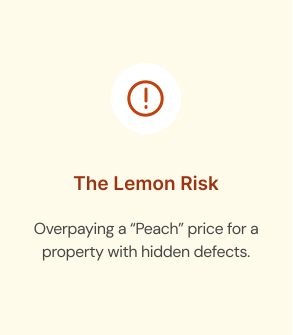
In real estate, the seller knows the true condition of the property, its issues, and how urgently they want to sell but the buyer doesn't. Because of this information gap, buyers can't easily tell a "peach" (good value) from a "lemon" (bad value).
Are you overpaying a peach price for a lemon, or underpaying a lemon price and missing out on a peach?

Anchoring
Humans tend to rely too heavily on the first piece of information they see.
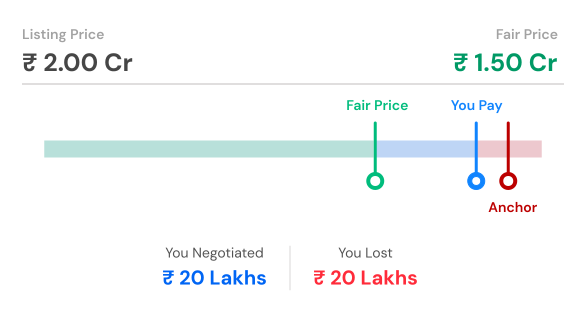
In real estate, this creates a major problem because the listing price acts as an anchor set by the seller, often without any real basis. Even if a property worth ₹1.5 Cr is listed at ₹2 Cr, a buyer feels they are "winning" by negotiating it down to ₹1.8 Cr.
In reality, the buyer has still overpaid by ₹30 Lakhs
Distant Buyer Penalty
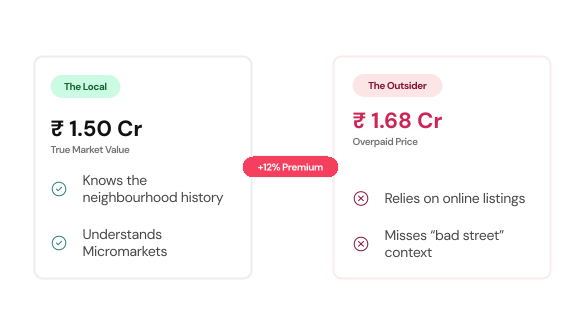
Studies by Turnbull & Sirmans show that people buying from outside a city usually pay a premium compared to locals.
Locals have on-ground knowledge that naturally protects them on price. Outsiders don't have this context.
Without a clear sense of what a micromarket is really worth, anyone unfamiliar with the area is far more likely to overpay.
Studies in Consumer Psychology
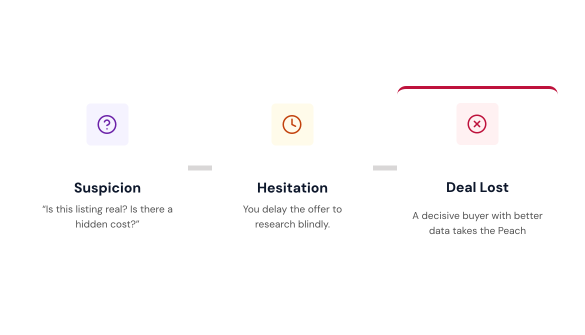
Studies in consumer psychology shows that price transparency increases purchase confidence even when the price is higher.
The problem in opaque markets like India is consumers always assume there is a hidden price which might delay their decision.
Why Knowing the Fair Price Matters?
PEACH vs LEMON
In real estate, the seller knows the true condition of the property, its issues, and how urgently they want to sell but the buyer doesn't. Because of this information gap, buyers can't easily tell a "peach" (good value) from a "lemon" (bad value).
Are you overpaying a peach price for a lemon, or underpaying a lemon price and missing out on a peach?
Anchoring
Humans tend to rely too heavily on the first piece of information they see.
In real estate, this creates a major problem because the listing price acts as an anchor set by the seller, often without any real basis. Even if a property worth ₹1.5 Cr is listed at ₹2 Cr, a buyer feels they are “winning” by negotiating it down to ₹1.8 Cr.
In reality, the buyer has still overpaid by ₹30 Lakhs
Distant Buyer Penalty
Studies by Turnbull & Sirmans show that people buying from outside a city usually pay a premium compared to locals.
Locals have on-ground knowledge that naturally protects them on price. Outsiders don't have this context, so they often end up paying more.
Without a clear sense of what a micromarket is really worth, anyone unfamiliar with the area is far more likely to overpay.
Studies in Consumer Psychology
Studies in consumer psychology shows that price transparency increases purchase confidence even when the price is higher.
The problem in opaque markets like India ,consumers always assume there is a hidden price which might delay their decision or make them back out of the deals. Their search for that lack of fair price slows down the entire transaction and they might end up losing a very good deal.